

E&R Planning
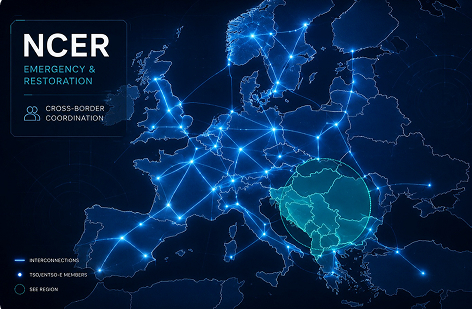
The Network Code on Emergency and Restoration (NCER) defines the framework for regional coordination among TSOs in emergency, blackout and system restoration states. The primary objective is to restore the power system to normal operational conditions in a secure, coordinated and efficient manner.
ROLE
SCC's role
As part of its regional coordination activities, SCC supports TSOs in the development, harmonisation and consistency assessment of System Defence Plans (SDPs) and Restoration Plans (RPs). This includes identifying potential inconsistencies between neighbouring TSOs’ plans, assessing cross-border impacts and proposing mitigating measures to improve operational security and regional preparedness.
SCC coordinates the consistency assessment process across the SEE region, performing consistency checks of collected data and cross-border arrangements. For borders involving multiple RCC service areas, submitted data are additionally verified through inter-RCC coordination to ensure harmonised regional solutions.
NCER
Regulatory framework
NCER entered into force in the EU in 2017 as a legally binding network code. Following the adoption of the Electricity Integration Package by the Energy Community Ministerial Council in December 2022, adapted versions of key EU regulations — including NCER and SOGL — became part of the Energy Community acquis. This regulatory alignment covers both EU Member States and non-EU Contracting Parties in the SEE region, providing the legal basis for participation in pan-European coordination frameworks such as SAFA (Synchronous Area Framework Agreement).